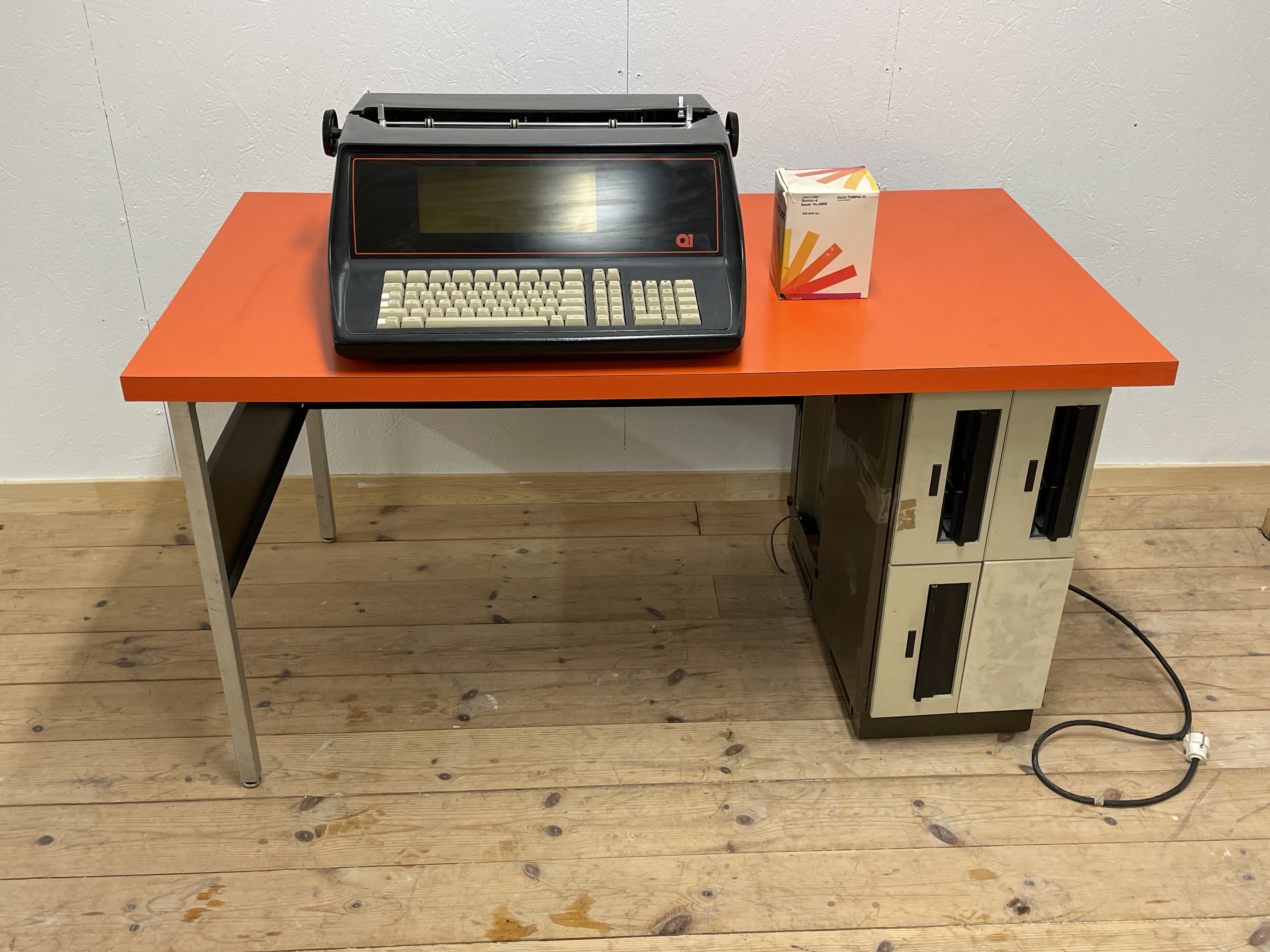
Timeline of Q1 Corp., 1969-2000 | Click on the images to view larger versions.
|
|---|
| 1969 | - April 1969: Daniel Alroy evaluates the IPO of Advanced Memory Systems (AMS) for the Wall Street investment firm Philips, Appel & Walden (P.A.&W.). AMS's initial product that year is the first 1Kb MOS DRAM IC.
- For his evaluation of AMS, Alroy speaks to several semiconductor experts, including Prof. Carver Mead of the California Institute of Technology, and is introduced to Moore's law.
- Alroy discusses his position that the Datapoint 3300 dumb terminal from CTC is "based on flawed assumptions" with Jim Walden, Managing Partner of P.A.&W.
Walden suggests that with his investors' seed capital, Alroy could build a better machine. - August 18, 1969: Daniel Alroy registers Blackpool Corp. as a domestic company in Delaware, according to Department of State records.
- August 31, 1969: Share ID 747256 of Blackpool Corp. is registered to Daniel Alroy, according to the U.S. National Archives & Records Administration.
- Alroy then evaluates CTC's IPO for P.A.&W.
- September 1969: Alroy discusses point-of-use computing concepts with Gus Roche, VP of R&D at CTC, attempting to convince Roche that small-scale local computers will displace larger distributed systems.
Gus Roche meets him halfway at an intelligent terminal with its own processor. - Per Alroy's suggestion, CTC begins development of an "intelligent terminal" - the Datapoint 2200.
- October 1969: Philips, Appel & Walden, along with Hambrecht & Quist, underwrite CTC's initial public offering.
- December 1969: Alroy is notified that the upcoming Datapoint 2200 is intended to use a single-chip microprocessor produced by Intel, then termed the 1201.
| 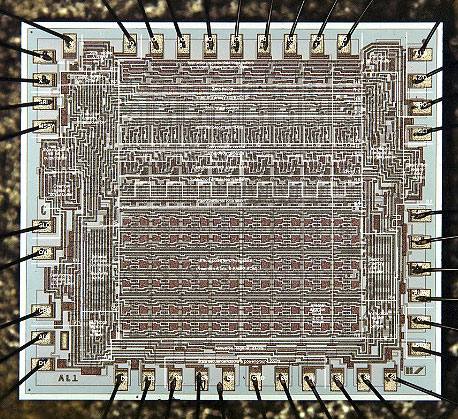
Die photo of an 8-bit CPU slice,
the AL1, first manufactured in 1969.
|
| 1970 | - February 18, 1970: Alroy registers Blackpool Corp. with the New York Department of State.
- May 1970: CTC officially releases the Datapoint 2200 intelligent terminal, whose development was catalyzed by Alroy's suggestion, albeit without the 1201 CPU.
- Alroy realizes Intel's 1201 was shelved, and immediately meets with Bob Noyce, of LSI and Intel fame.
He urges Noyce to continue development of the 8-bit microprocessor, now termed the 8008, and suggests that "[Alroy] might be the 8008's first customer."
Noyce agrees, but says he needs a release from CTC, who contracted the CPU, to allow the project to continue. - Alroy meets with Phil Ray, President of CTC, who grants Intel the needed release.
Development on the 8008 resumes. - July 22, 1970: Blackpool Corp. is officially renamed to Q1 Corporation, according to state records.
| 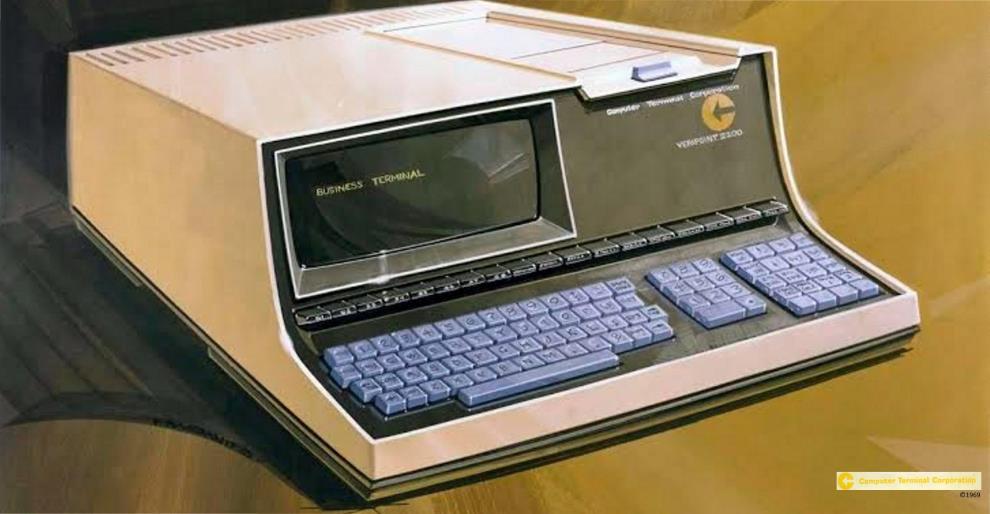
Illustration of a Datapoint 2200.
|
| 1971 | - October 6, 1971: An interview with Daniel Alroy titled "Market Place: Mini-Computer: Some Concern" is published in the New York Times, where he lays out his vision for the future of microcomputing.
- November 1971: Intel releases their first 4-bit CPU, the 4004.
Alroy thinks that it is too limited for serious business use and focuses on development using the 8008. - Sometime this year, Q1 begins development of their first product, the Q1/T microcomputer system.
| 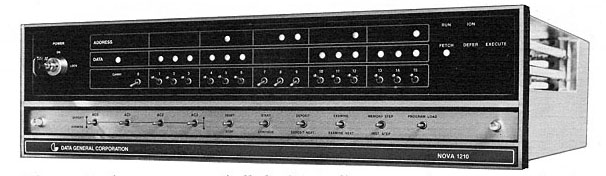
A typical minicomputer of the 1970s.
|
| 1972 | - January 26, 1972: Q1 is mentioned in the Securities and Exchange Commision's News Digest of January 31, 1972 as having filed for registration of 100,000 shares of company stock, to be offered publicly at $15 a share.
Additionally, it notes that "the company is engaged in the development and intends to manufacture and sell small, general-purpose office computer systems."
This indicates that development of their first system was underway.
Also notes the address of their first office - 4 West 16 St., New York, NY 10011. - April 1972: Intel releases their 8-bit 8008 microprocessor to the public.
- July 8, 1972: First in a long run of Q1 employment ads is printed in the Nassau, NY Newsday newspaper, looking for an engineer with "power supply design experience" for their "Long Island facility."
Extremely notable is the very large ad on the same page for LSI/IC engineering positions at Litton Industries's Litcom Division, which would be Q1's very first customer months later. - October 31, 1972: A Newsday ad for a secretary position at Q1's "new Farmingdale facility" is advertised.
This is likely when Alroy's assistant Barb Medlin was hired. - November 1, 1972: The computer magazine Computerworld notes that "Q1 Corp. has appointed Auditec, Inc. as its first marketing dealer representative for Q1 Office Computer systems in the U.S."
- November 9, 1972: Q1 Corp. is mentioned in a New York Times article about investors as having "plans for the manufacture and sale of a small, general-purpose office computer system," and that "the idea was to produce these devices at relatively low cost so that they could be offered in competition with the machines of larger, better-financed companies."
- December 10, 1972: Nassau's Newsday has an ad for positions at Q1.
This is the first instance of their logo appearing in print, at this point apparently being striped.
The ad states that "Q1 CORPORATION is a rapidly growing company that has developed an advanced, low-cost, commercial office computer system utilizing LSI technology."
This all but confirms that Q1 did have at least one production microcomputer ready by this point.
Additionally, this lists Q1's first facility's location - 6 Dubon Court, Farmingdale, NY 11735. - December 11, 1972: Q1 delivers their first production microcomputer system to the Litcom Division of Litton Industries in Melville, Long Island, New York.
Additionally, Q1's 1978 trademark filing lists their "First Use" being on December 11, 1972.
According to the United States Patent and Trademark Office (USPTO; see here), "first use anywhere" constitutes "the date when (1) the goods were first sold or transported," further solidifying this claim.
| 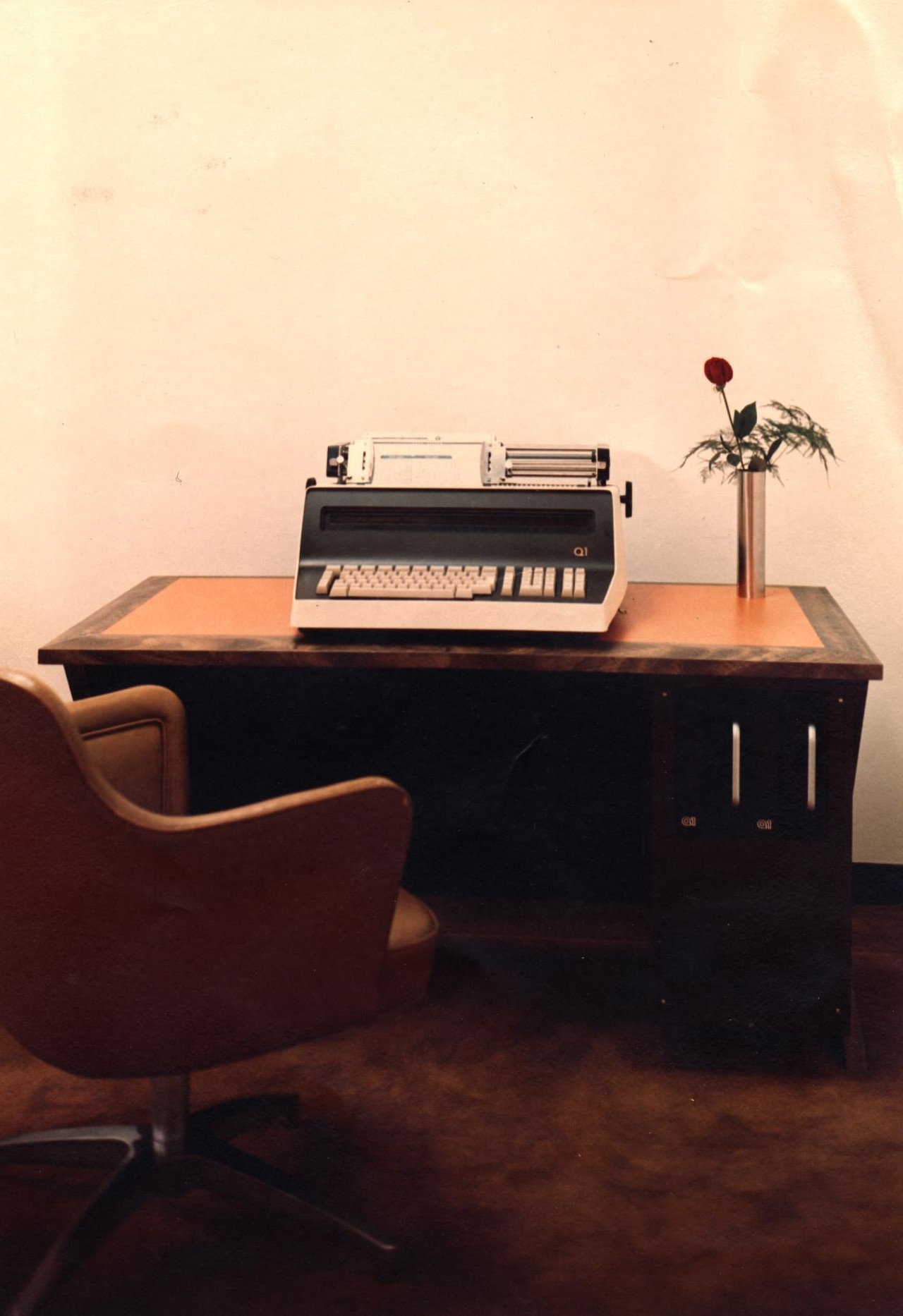
A 1972 Q1/T microcomputer system.
|
| 1973 | - January 29, 1973: An article about Q1, presumably announcing their first system, is published in Electronic News.
Unfortunately, this publication is very poorly documented, and I have not found any online or phyisical library that has a copy, so this is one of the few of Alroy's claims which is unverifiable. - January 31, 1973: The first verifiable mention of the Q1/T system's release is published in Computerworld magazine under the article "Minicomputer Allows PL/I Programming."
At this time, the term "microcomputer" was so novel that it wasn't yet applied to this machine. - February 1, 1973: A similar article, "Desktop computer uses PL/I language," is published in volume 21, issue 3 of Electronic Design magazine.
Notably, this more engineering-focused publication confirms that "the processor used is the Intel 8008 integrated circuit," and, even more shockingly, this article states that "Q1 is considering use of a new Intel processor chip, the 8080, to speed the computer."
The first engineering prototypes of the Intel 8080 only became operational in late 1973, and only reached production in April 1974 - this article was published almost a year and a half before the chip was even released!
In my opinion, this gives credence to Q1's ability to have developed their first system at such an incredible pace. - February 1973: The second unit of Q1's first system is delivered, according to Alroy; the customer is not noted.
- February 1973: Yet another article about the new Q1/T is published, this time in the monthly issue of Datamation.
This article is also quite significant - firstly, along with it is a picture of the desktop console of the Q1/T unit, enabling closer comparison to other known photos of early Q1 systems.
Secondly, the use of plural verbage in the final sentence is quite interesting: "The vendor says initial customers have received their units."
This further suggests that Q1 already had several customers and systems installed by this point. - According to Alroy, Q1 Vice President Ron Sommer arranged for Alroy to meet with Heinz Nixdorf in early 1973.
Heinz was the president and founder of Nixdorf AG, an early German computer company.
Apparently, Q1 was paid $400,000 for the "exchange for a sale of know-how."
According to early Q1 engineer Rick Smets's 2016 account, "the presidents of the two companies [Q1 and Nixdorf] began fighting and the contract was cancelled after a few months."
I have only found one mention of this agreement, in a 1973 issue of Common Market Reports: Euromarket News, which mentions that "Nixdorf Computer AG of Germany and Q1 Corp., New York, have signed a cooperation pact for the joint development and sale of a new computer system. In addition, Nixdorf has agreed to lend Q1 a sum of $40,000 per month over a 10-month period, starting now..." - August 2, 1973: A very notable schematic - that of the Q1/LMC system and its 8080 CPU - is drawn up by one M. Sarfaty.
Various other Q1/LMC schematics would continue to be drawn and revised throughout late 1973 and 1974. - September 28, 1973: According to the USPTO, this is the Q1 trademark's "First Use in Commerce," which constitutes "the date when (1) the goods were first sold or transported ... [through] interstate commerce or commerce between the United States and a foreign country" (see here).
Additionally, a March 1974 accounting computer survey from Datapro reports the first Q1/LMC to have been delivered in September 1973. (In my opinion, this is not a reference to the 8080 Q1/LMC, but rather the Q1/C sold in international markets, discussed later.)
Alroy's account mentions that deliveries of units to Germany, Hong Kong, and Taiwan had taken place this year, which would line up with this date.
Victor Steiner, an Australian Q1 employee, corroborates that around 1973, he co-founded "Q1 Far East Ltd." in the Tak Yan Commercial Building at 30-32 D'Augilar Street, HK, along with a Chinese electronic engineer and Alroy, whom he'd met in Hong Kong in the late 1960s. - December 18, 1973: The $35M, 17-story Tak Yan Commercial Building, funded by the real estate tycoon Kong Tak-Yan and and his construction group Keng Fong Sin Kee, opens in Hong Kong, with over 3,000 guests attending.
Q1's office on the 6th floor had been purchased beforehand, so they were able to start operations immediately. - Sometime this year, a Q1 brochure for a "low cost, multi-purpose micro computer system" is printed.
Despite the shown unit's similarity to the Q1/T, there are some discrepancies - its floppy disk and RAM capacity is much higher; additionally, the face of the desktop console is labeled "Q1/C," which makes me suspect this is the export "Q1/LMC" identified by Datapro.
Along with corroborating the addresses of Q1's "Corporate Offices" and "Far East Operation Branch," the brochure lists a "Taiwan Automation Co.," presumably Taiwan's distributor of Q1 systems, as well as their flyer for Q1 systems written in Taiwanese on the next page. - Sometime this year, the first explicit listing of a Q1 system in a magazine buyer's guide is made, being the Q1/C, in volume 6 of Modern Data (see lower image to right).
Due to the exceedingly poor scan quality, I have transcribed the text below:
Q1 Corporation. Q1/C, (AC/SBC). 4K to 16Kbyte CPU; integral gas panel display I/O terminal; keyboard, printer; floppy disc storage. Operating System: DOS (floppy); Compilers: PL/1; Applications: Credit Union. $9K to $22K.
| 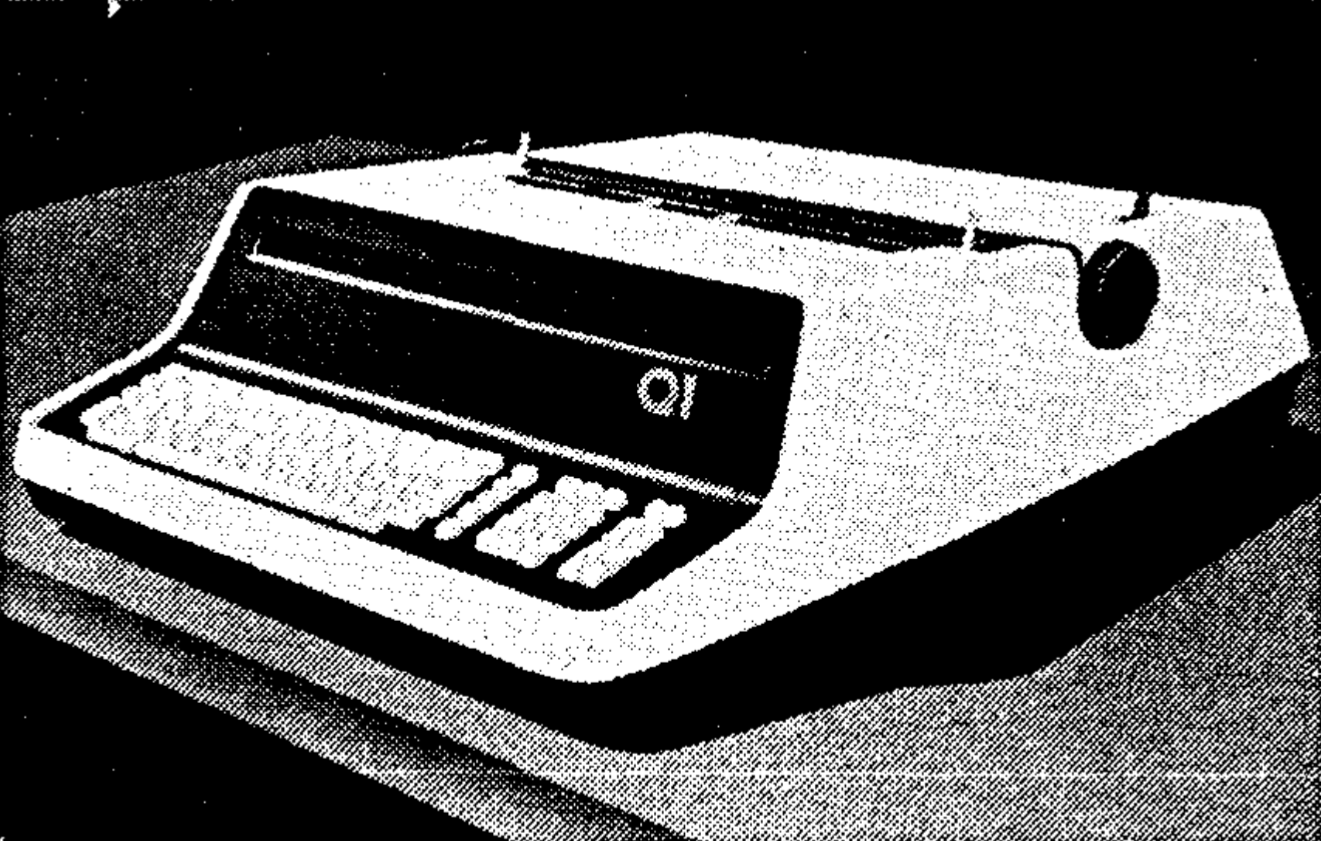
The console of a Q1/T, as seen in
the February 1973 issue of Datamation.
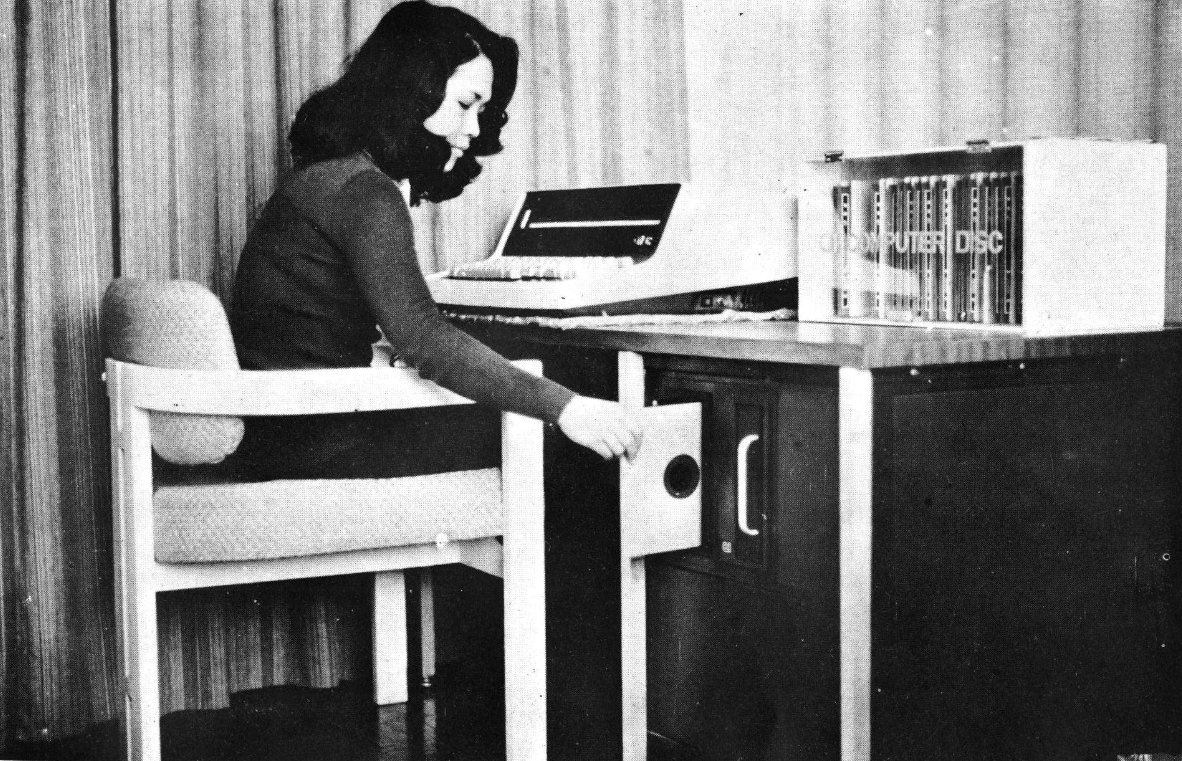
A Q1/C microcomputer from 1973,
as seen in a product brochure.
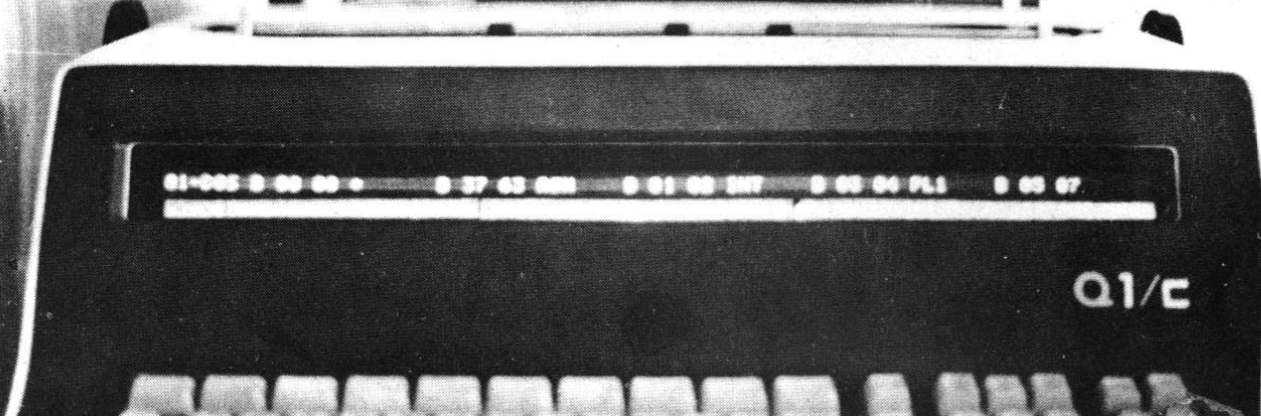
The faceplate of a Q1/C console.
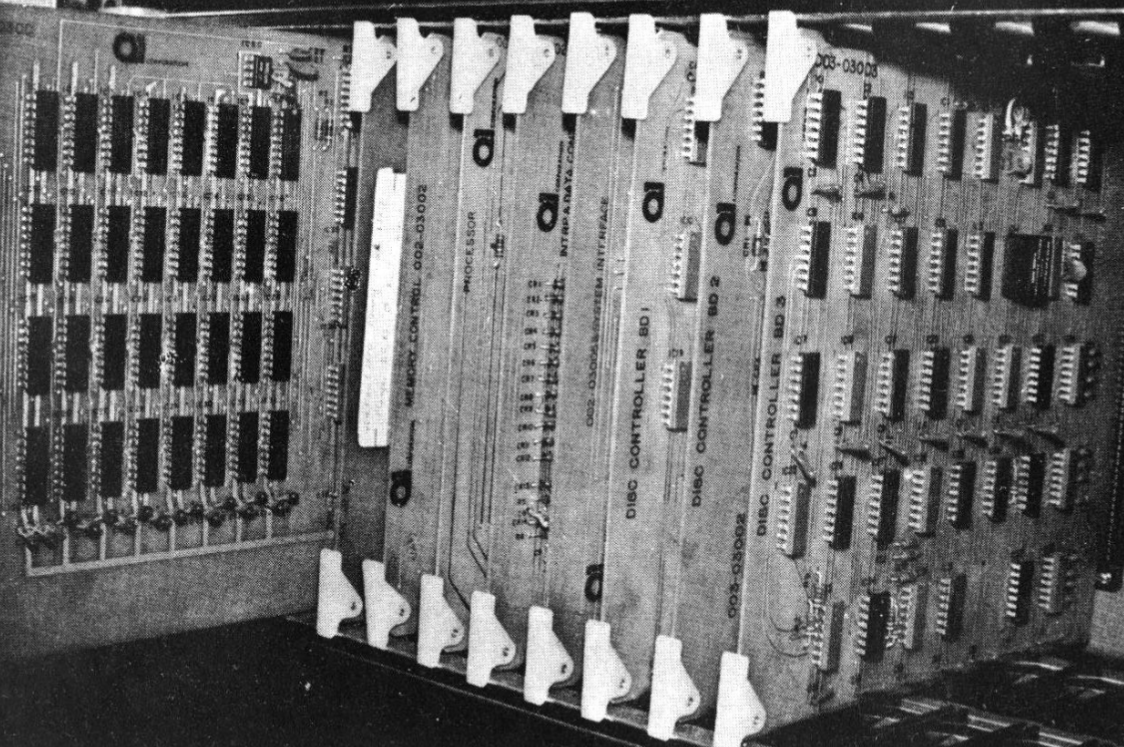
A Q1/C's logic card cage.

The Q1/C, as listed in the 1973
Modern Data buyer's index.
|
| 1974 | - January 9, 1974: A Computerworld article includes Alroy's comments on the current computer industry under the title "General-Purpose Computers Seen Capturing the Business Market."
- March 15, 1974: Isidore Langert of Queens, NY, an early investor in Q1 (as mentioned in the November 9, 1972 issue of the New York Times), files a lawsuit against Q1 titled Langert v. Q-1 Corp. with the United States District Court for the Southern District of New York.
This hyphenated spelling of "Q-1 Corp." was quite common in early mentions of the company. - March 1974: Datapro publishes their report "All About Small Accounting Computers," which mentions Q1, noting that 10 Q1/LMC units had been delivered in the U.S. by that point.
- April 1974: Intel commercially releases their upgraded 8080 processor.
- April 1974: According to Alroy, the first pre-production 8080 Q1/LMC is delivered to the Israeli Air Force (IAF).
Despite the 8080 CPU releasing that same month, Q1 clearly had knowledge of its production ahead of time.
Additionally, Q1 engineer Karl Wilhelm-Wacker corroborates that final clock timings of the Q1/LMC had to be adjusted due to last-minute changes to the chip.
- June 1974: Alroy is interviewed for Personnel Journal, giving an extended commentary on general-purpose computers under the title "As You Were Saying - Has Specialization Been Oversold?"
- June 1974: Q1 receives follow-up orders, presumably from the IAF, for more 8080 Q1/LMCs.
- August 1974: The prototype Q1/LMC is returned to Q1, and production models are sent out.
- October 1974: The General Manager of Taiwan Automation Co., C. S. Ho, is noted as having obtained representation of Q1 this month in a telegram sent in 1975.
- October 16, 1974: A design engineer position at Q1 is advertised in Nassau Newsday, with "experience with Intel 8008/8080 or flexible [floppy] disks preferred."
- The Q1/LMC reference manual is cited in the 1974 book "Illustrative Computer Programming for Libraries."
- Sometime this year, the business consulting firm Computer Sciences Corp. evaluates Q1's computer systems and recommends them to their client, the National Aeronautics and Space Administration, or NASA.
- According to Bloomberg, Q1 Corp. was purchased outright by Nixdorf Computer AG in 1974.
| 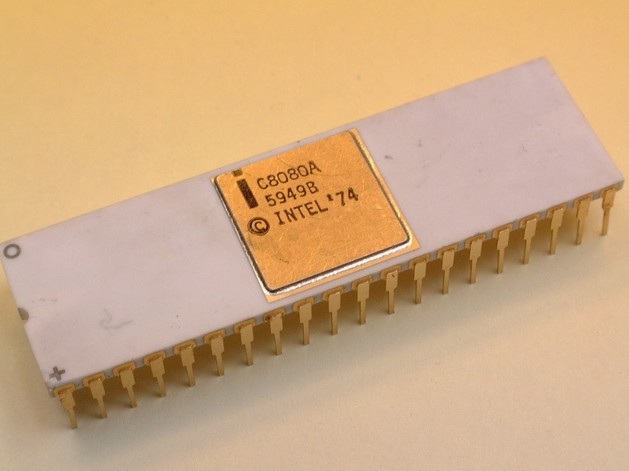
The Intel 8080A CPU, a slight revision
of the original 8080 chip from 1974. 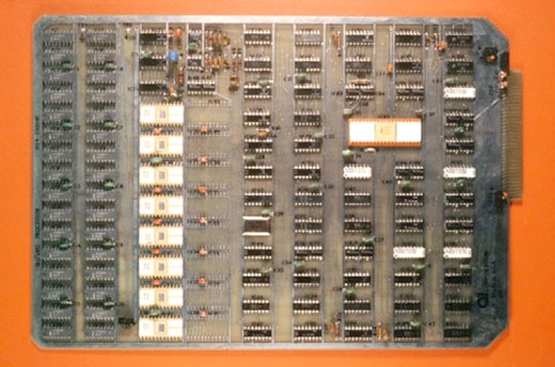 The first revision of one of the
1974 8080 Q1/LMC's logic boards.
| 1975 | - March 1975: Another survey report, "All About Small Business Computers," is published by Datapro. Again, it mentions Q1 and notes the Q1/LMC, which by this point had sold 100 units in the U.S.
- April 1975: Daniel Alroy organizes and chairs the 1975 IEEE International Conference in New York.
The main focus and title of this conference is "The Microcomputer Revolution."
Gus Roche of CTC (now Datapoint) is to present at the conference, but dies in a car accident on the way there. - May 1975: Alroy again comments on the computer market in the article "Catching up with Microprocessors" in this month's issue of Datamation.
However, in this article he makes a rather prophetic statement: "All the predictions suggest that the era of the microprocessor will bring the computer revolution directly to the doorstep of the average person." - August 18-22, 1975: According to a 1975 telegram sent from Taipei, C. S. Ho of Taiwan Automation Co. is to man Q1's booth at "Computech '75," presumably a computer conference, from August 18th to 22nd.
- December 11, 1975: The newest circuit diagram in the Q1/LMC schematics is last revised.
- Sometime in 1975, Intel publishes a brochure for their SBC 80/10 system which uses their 8080A CPU.
In the "Orient Marketing Offices" section of the rear index, Q1's "Far East Ltd." Hong Kong branch is mentioned as a licensed distributor of Intel components and systems, further solidifying Q1's ties to Intel.
| 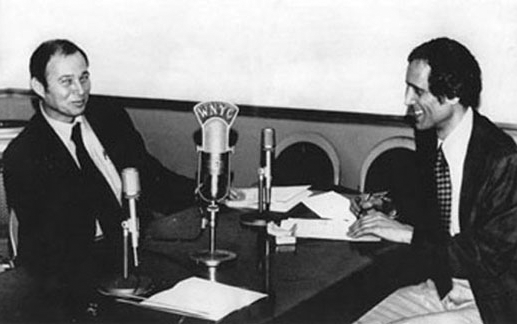
Daniel Alroy (left) chairs the April 1975
IEEE International Conference in New York.
| | 1976 | - November 22, 1976: The first schematic for the Zilog Z80-based Q1/Lite system is drawn up by one W. D.
- Sometime this year, the only known surviving Q1/LMC unit (currently in possession of the Datormuseum in Sweden) is manufactured.
| The Datormuseum's 1976 Q1/LMC.
(Image is 2.5MB)
| | 1977 | - March 1977: The "Advanced PL/1 Programmer's Manual" is published by Q1.
- October 1977: A system overview titled "The Q1/Lite Microcomputer System" is published by Q1.
The most notable things about this publication are that, firstly, it mentions the Q1/Lite using a processor called the "Intel 8800" (not to be confused with the Intel 8088 or Altair 8800). The 8800 was Intel's codename for a 32-bit processor that was meant to be what the 8080 was to the 8008. It was supposed to have automatic garbage collection, partial object-oriented programming support, and many other features very remarkable for the late 1970s. However, it was unfortunately delayed, and only released in 1981 as the rather unsuccessful Intel iAPX 432. Q1's knowledge of this processor 4 years prior to release is very significant.
The second notable thing is that this publication has an entire section dedicated to "electronic mail" - and it uses that specific phrase! Q1, again correctly, predicted that the ineffecient means of physical paper communications would soon be replaced by an entirely electronic system. Several years later, they prototyped an entire office device dedicated to this concept, which will be noted later. - November 21-29, 1977: Q1 systems have begun to be installed in all eleven NASA bases by this point, mostly for accounting and word processing use. Alroy receives a letter from R. H. Curtin, Director of Facilities at NASA, thanking him and his team for their presentations at the "SPECSINTACT Coordinating Team, Managers and Other Users Meeting."
- Sometime this year, Q1 becomes one of the first companies to utilize bubble memory, a form of non-volatile solid-state storage that was expected to replace floppy disks in the late 1970s.
| 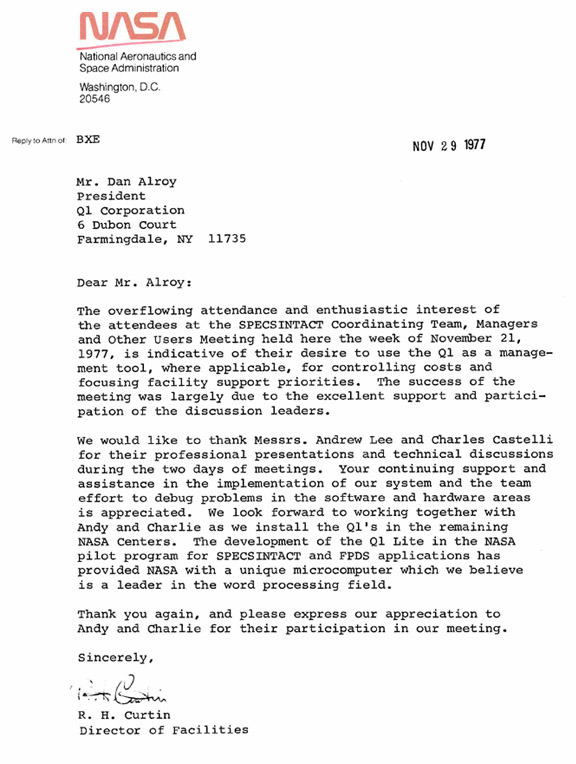
NASA Facilities Director R. H. Curtin
thanks Alroy for Q1's system presentations
in a November 1977 letter.
| | 1978 | - Around this time, Q1 engineer Karl Wilhelm-Wacker is requested by NASA to construct a text-to-speech system to interface with a Q1/Lite for a visually impaired employee. Wacker becomes an officially licensed independent subcontractor for NASA and constructs the system, incorporating a Votrax speech synthesizer and a Zilog Z80 processor.
- December 1, 1978: Q1 finally files the needed paperwork to claim a trademark on their name and logo, listing its "First Use" as December 11, 1972 and "First Use in Commerce" as September 28, 1973.
| | 1979 | - September 1979: A PhD thesis mentions the Q1 Microlite for the first time.
- November 1979: Q1 begins an $11.5M joint venture with the National Enterprise Board of the United Kingdom.
- November 15, 1979: A NASA technical report titled "The Work Request System of a NASA Q1 Package" (NASA-CR-162511) is published. This notes NASA's particular use of the Q1/Lites as a networked system of managing various contracts and other financial data. Additionally, it confirms that all eleven NASA bases are now equipped with Q1/Lite systems.
- December 1979: The Q1/Lite is included in the volume 1, number 14 issue of Benchmark Report published by the Association of Computer Users. Q1 is noted as having remarkably good and personalized customer service!
- Daniel Alroy steps down from his position as President of Q1, leaving the position to Glen Malm.
| 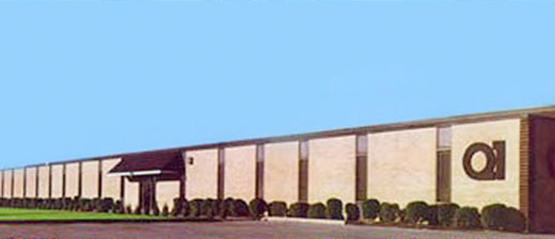
Q1's facility as of 1980, then located
at 125 Ricefield Lane, Hauppauge, NY.
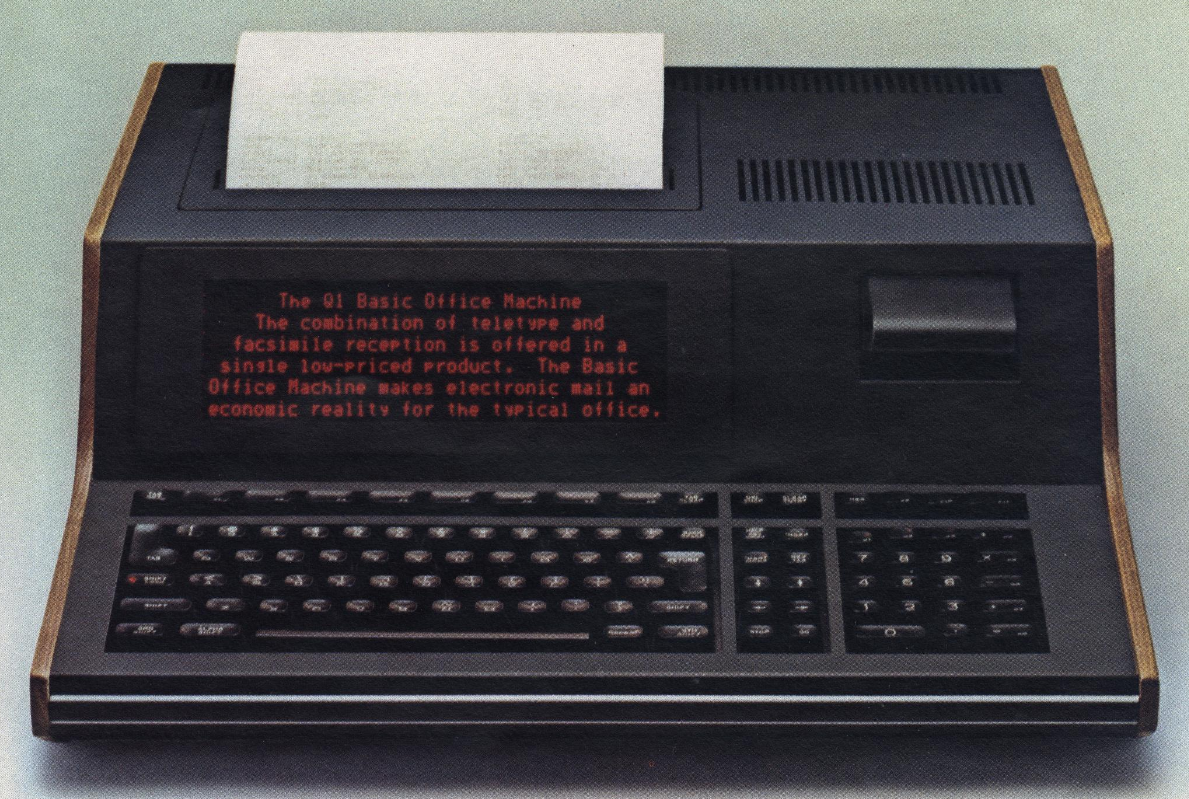
The prototype Q1 Basic Office Machine.
Even the display touts its e-mail capabilities!
| | 1980 | - The Q1 Basic Office Machine is prototyped, with the intention of being an all-electronic faxmachine-teletype hybrid with the ease of use of a typewriter. A brochure titled "The Q1 Basic Office Machine" is produced. Of note is the last sentence - "The Basic Office Machine makes electronic mail a technological and economic reality for the typical office." According to engineer Karl Wacker, Q1 had issues with the sleek thermal printer used in the unit and was forced to abandon the project.
- November 21, 1980: At COMDEX '80, Q1 set up a presentation booth for their computer systems in the MGM Grand Hotel and Casino in Paradise, Nevada, on the Las Vegas strip.
At around 7:07 AM, a fire broke out in a restaurant on the first floor, which would spread rapidly.
This incident would go on to be known as the MGM Grand Fire, one of the deadliest building fires in American history, resulting in 85 casualties and over 600 injured.
According to contemporary accounts from former employees, all Q1 personnel escaped safely.
| | 1981 | - March 23, 1981: Q1 begins advertising the Model 311, one of the first 5¼" hard disk drives. Marketed as a "micro-Winchester," the 311 had a 5MB capacity and a density of 5Kb/in., and a price between $4,000 and $5,000.
- April 13, 1981: Q1 airs an ad for their computer systems on live broadcast television.
This specific date is known due to accounts recalling this was during the first launch of the NASA Space Shuttle. - May 4, 1981: The first known Q1 Microlite advertisement is published.
- June 15, 1981: A "Q1 Microlite II" is mentioned in an article. This name is likely attributed to the standard Microlite to compete with the contemporary Apple II.
- July 27, 1981: The Q1-68000 system is mentioned as having been launched. According to the article, it is a UNIX-compatible workstation based on the Motorola 68000 CPU that includes a 24" color CRT display, 256K of RAM expandable up to 2.2MB, and an optional networking capability, Q-net, for an additional $1,000. Depending on the configuration, the Q1-68000 sold for between $13,000 and $500,000.
| 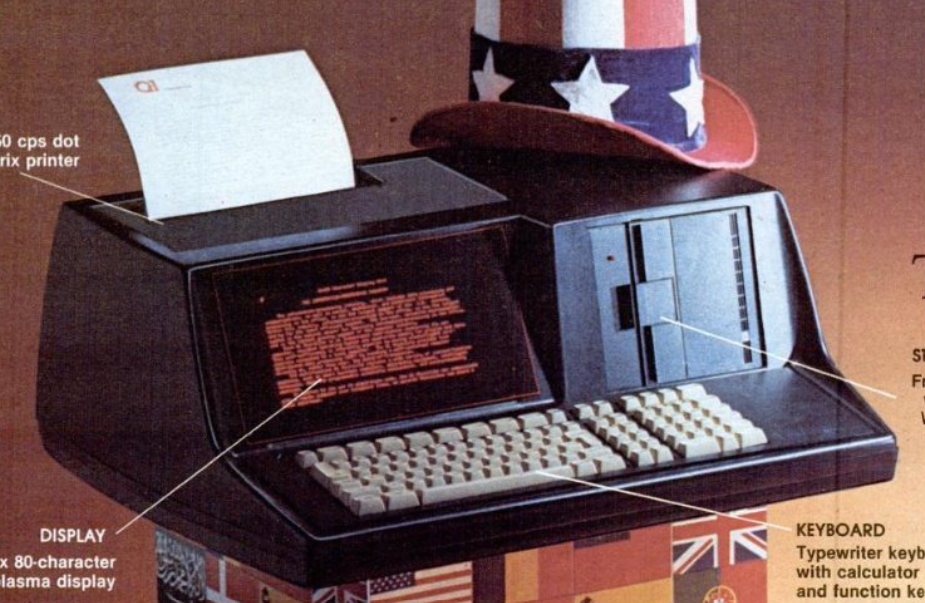
A Q1 Microlite as seen in a 1980 brochure,
equipped with a 311 HDD (to right of floppy).
| | 1983 | - August 1983: A Q1-68000 Desktop system is mentioned in a product index, as well as the original Q1-68000 system.
| ... | ... | ...
|
|---|
| 1989 | - According to Bob Frazier, Q1 had shrunk down to just three employees - him, a secretary, and Glen Malm. The company is now being operated out of a garage.
| ... | ... | ...
|
|---|
| 1993 | - May 14, 1993: Q1 instates Morton Jaffe of Coram, NY as its new Chief Executive Officer.
| | 1994 | - March 29, 1994: Q1 files its final biennial statement.
| ... | ... | ...
|
|---|
| 2000 | - May 3, 2000: After nearly 31 years of operation, Q1 Corporation is finally officially dissolved by the New York Department of State.
| |